
What Was CERN’s Role in the Birth of the Web
The World Wide Web, often referred to simply as the web, has transformed how we communicate, learn, shop, and conduct business. While most people credit big tech companies for shaping today’s digital world, the foundation was laid by researchers at CERN (the European Organization for Nuclear Research). Originally built to help scientists share information across the globe, the web has since become a universal platform connecting billions. Understanding CERN’s pioneering role not only highlights the roots of this digital revolution but also offers perspective on how innovation in research labs can influence society at large.
How Did the Web Idea Originate at CERN?
The idea for the World Wide Web came in 1989, when British scientist Tim Berners-Lee, working at CERN, proposed a system to allow information sharing between researchers. At the time, laboratories across the world were generating vast amounts of data, but sharing it was slow and inefficient. Berners-Lee’s vision was a decentralized system that could connect documents through hyperlinks, making knowledge accessible and navigable. His proposal evolved into a working prototype by 1990, leading to the first web browser and server software.
What Was the Role of the CERN Company in Developing the World Wide Web?
The role of the CERN company in developing the world wide web was crucial. CERN provided not only the environment but also the resources for Berners-Lee’s project to take shape. By 1991, the first website went live on CERN’s servers, explaining the concept of the web itself. Equally important, in 1993, CERN made the web available to everyone royalty-free. This decision to keep the technology open rather than privatized ensured that the web could spread globally without licensing barriers, fueling innovation far beyond scientific research.
Why Did CERN Make the Web Free for Everyone?
Unlike many technological inventions that were commercialized, CERN’s leadership recognized that the web’s true potential lay in universal accessibility. By waiving intellectual property rights, they encouraged universities, businesses, and eventually everyday users to adopt and expand it. This open access approach mirrored CERN’s ethos as a scientific organization—collaboration over competition. According to the official CERN history archives, this decision was one of the defining moments that allowed the web to outpace competing systems at the time.
How Did the First Website Look and Work?
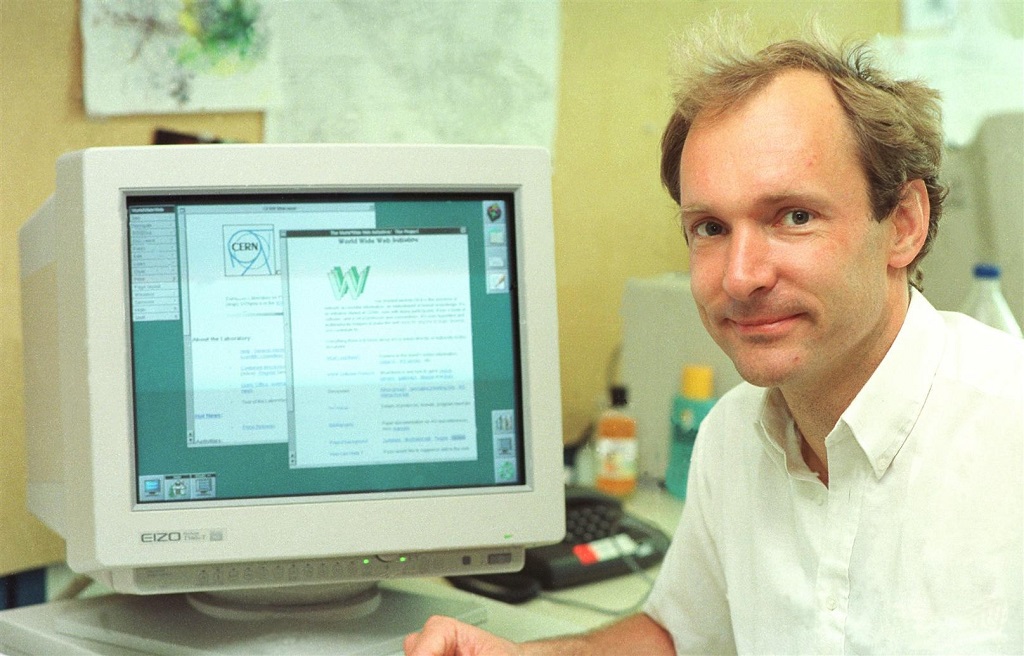
The first website was not glamorous by modern standards. Hosted on a NeXT computer at CERN, it was a simple text-based page that described what the web was, how to create web pages, and where to download the software. Despite its simplicity, the underlying innovation was groundbreaking: users could click hyperlinks to jump from one document to another. This ability to connect information seamlessly laid the foundation for the vast interconnected digital world we know today.
What Role Did Collaboration Play in Expanding the Web?
Although Berners-Lee initiated the project, CERN’s culture of collaboration accelerated its growth. Scientists across Europe and the United States quickly began experimenting with the technology. Within two years of its launch, new browsers like Mosaic made the web more user-friendly and visually engaging. CERN’s open licensing meant that anyone with programming skills could build tools, websites, and applications. This collaborative spirit, rooted in the organization’s mission, was a direct catalyst for the web’s rapid adoption.
How Did the Web Move Beyond Science?

At first, the web served researchers, but its open architecture attracted innovators outside science. Universities, libraries, and early tech enthusiasts built websites, and soon businesses saw its potential. The mid-1990s dot-com boom was directly tied to CERN’s decision to keep the web open. Without licensing restrictions, startups could experiment, leading to search engines, e-commerce platforms, and social networks. This shift illustrates how a scientific tool designed for data sharing evolved into the backbone of global communication and commerce.
What Are the Lasting Impacts of CERN’s Decision?
CERN’s decision still shapes the web today. Its emphasis on open standards fostered innovation across industries. For example:
- Educational institutions use the web for global collaboration.
- Businesses built digital marketplaces, revolutionizing trade.
- Governments use the web for transparency and public communication.
- Communities worldwide leverage it for social and cultural exchange.
Furthermore, initiatives like the World Wide Web Consortium (W3C), founded by Berners-Lee, continue CERN’s legacy by ensuring web standards remain open and accessible to all.
How Does CERN Continue to Influence Technology Today?
Although CERN is no longer directly involved in web development, it remains a hub of technological innovation. Its Large Hadron Collider produces enormous amounts of data, requiring advanced computing and storage systems. Many of these technologies influence broader industries, from cloud computing to cybersecurity. The spirit of innovation that gave birth to the web continues to drive progress at CERN, demonstrating how investment in science can yield benefits far beyond its original purpose. For more deep-dive insights, platforms like Index Marks highlight similar stories of technology shaping our modern world.
Conclusion: Why Does CERN’s Contribution Matter Today?
The World Wide Web is more than a technological breakthrough—it is a cultural and economic force. CERN’s decision to create and release the web freely transformed the trajectory of the digital age. Without this openness, the internet might have developed into a fragmented, privatized network, limiting innovation and access. By fostering collaboration, CERN ensured that the web became a truly global tool. As we face questions about digital equity, open-source platforms, and the future of online innovation, remembering CERN’s pioneering role serves as a reminder of the power of openness in shaping a connected world.
Read More Also: 10 essential apps for every graphic designer
FAQ Section
Who invented the World Wide Web?
Tim Berners-Lee, a British scientist working at CERN, invented the web in 1989. He created the first browser and server, making information sharing easier for researchers.
Why was CERN important in web development?
CERN provided the environment, resources, and crucially, the decision to make the web freely available. This allowed global adoption without licensing barriers.
What was the first website?
The first website was a text-based page hosted on a NeXT computer at CERN. It explained what the web was and how users could create their own pages.
Did CERN profit from the web?
No. Instead of commercializing the web, CERN chose to release it freely to the public, prioritizing global accessibility over financial gain.
How is the web different from the internet?
The internet is the infrastructure of connected networks, while the web is a service built on top of it that uses browsers, servers, and hyperlinks.
Is CERN still involved with the web?
CERN no longer manages web standards, but it continues to pioneer data-intensive technologies that influence modern computing and digital infrastructure.
Why was making the web open-source significant?
By not restricting access, CERN enabled widespread innovation. This decision paved the way for businesses, educators, and communities to use and expand the web.
Sorry, the comment form is closed at this time.