
How to Archibus Software Manages Facility Change Management
Facility change management presents complex challenges for organizations managing multiple buildings and spaces. Archibus software provides comprehensive solutions for tracking, planning, and executing facility changes efficiently. This integrated workplace management system streamlines processes that traditionally required manual coordination across departments.
Understanding how Archibus manages facility change management helps organizations optimize space utilization and reduce operational costs. This guide explores the software’s key features, implementation strategies, and best practices for successful change management.
Understanding Facility Change Management Challenges
Facility change management involves coordinating space modifications, relocations, and reconfigurations. Organizations face difficulties tracking space assignments, managing move requests, and maintaining accurate floor plans. Additionally, poor communication between departments creates delays and cost overruns.
Traditional manual processes rely on spreadsheets, email chains, and paper forms. These methods lack real-time visibility into change status and resource availability. Therefore, facilities teams struggle to prioritize requests and allocate resources effectively.
Compliance requirements add another layer of complexity to facility changes. Building codes, safety regulations, and accessibility standards must be verified before modifications. Moreover, historical documentation becomes essential for audits and future planning.
Archibus addresses these challenges through centralized data management and automated workflows. The software creates a single source of truth for all facility information. Consequently, stakeholders access accurate, up-to-date information throughout the change management process.
Core Archibus Change Management Modules
Archibus organizes facility change management through interconnected modules addressing specific functions. The Space Management module provides the foundation by maintaining accurate floor plans and space inventory. This module tracks every room’s purpose, capacity, and occupancy status.
The Move Management module handles relocation requests from initiation through completion. Users submit move requests through self-service portals with relevant details and requirements. Additionally, the system automatically routes requests to appropriate approvers based on organizational rules.
The Project Management module coordinates larger facility changes requiring multiple phases. This component tracks timelines, budgets, and resource allocation across complex projects. Therefore, project managers maintain visibility into all change initiatives simultaneously.
The Capital Planning module connects change management to long-term facility strategies. Organizations forecast future space needs and budget requirements based on historical data. Moreover, this module helps justify capital expenditures with data-driven analysis.
Centralized Space Data and Floor Plan Management
Archibus maintains comprehensive space databases linked to CAD-integrated floor plans. Every room, desk, and common area exists as a digital record with detailed attributes. These attributes include square footage, capacity, department assignment, and equipment inventory.
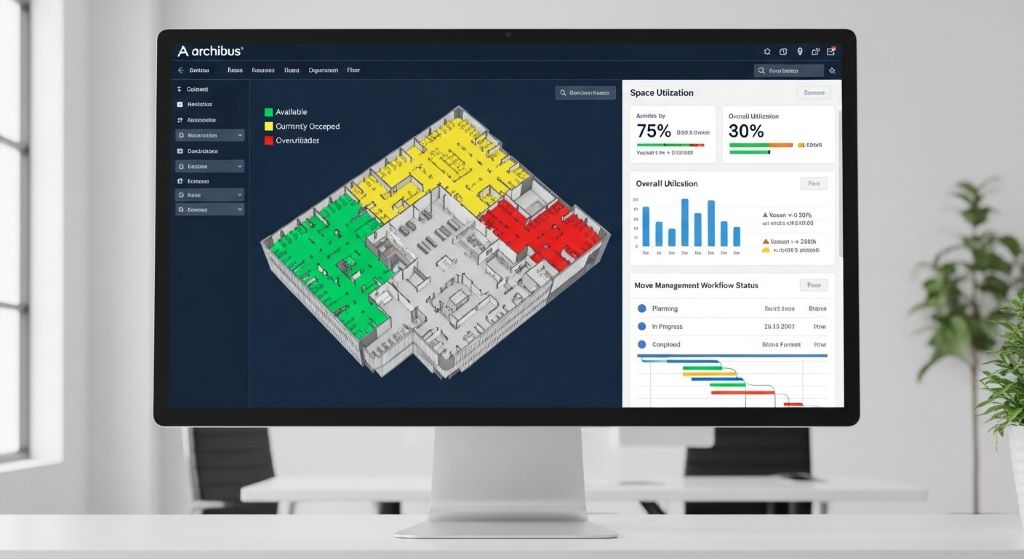
Real-time floor plans display current occupancy and available spaces visually. Color-coding indicates space status, utilization rates, and upcoming changes. Additionally, interactive plans allow users to click spaces for detailed information and available actions.
The system tracks space standards defining requirements for different roles and functions. Organizations establish guidelines for executive offices, workstations, conference rooms, and specialized spaces. Therefore, change requests automatically check compliance with established standards.
Historical tracking preserves previous space configurations and assignment history. This audit trail proves valuable for compliance reporting and trend analysis. Moreover, historical data supports forecasting and scenario planning for future changes.
Automated Workflow and Approval Routing
Archibus workflows automate change management processes from request through completion. The system routes requests based on configurable business rules considering factors like cost thresholds, space types, and organizational hierarchy. Consequently, appropriate stakeholders review and approve changes without manual coordination.
Approval workflows support parallel and sequential routing patterns. Multiple approvers can review simultaneously, or approvals can progress through hierarchical chains. Additionally, the system sends automatic notifications and reminders to prevent bottlenecks.
Conditional logic within workflows adapts routing based on request specifics. High-cost changes might require additional executive approval, while simple desk moves follow streamlined paths. Therefore, the system balances thorough review with operational efficiency.
Workflow dashboards provide visibility into pending requests and approval status. Facilities managers identify delayed requests and intervene when necessary. Moreover, analytics reveal workflow bottlenecks requiring process improvements.
Managing Move Requests and Relocations
The Archibus move management process begins with user-initiated requests through web portals. Employees specify current locations, desired destinations, move dates, and special requirements. The system validates requests against space availability and organizational policies automatically.
Move coordinators review requests and assign resources including movers, IT support, and furniture. The software calculates move costs based on distance, furniture quantities, and service requirements. Additionally, the system generates work orders for each service provider involved.
Timeline management ensures moves occur without disrupting operations. Archibus schedules moves during off-hours or coordinates phased relocations for large groups. Therefore, organizations minimize productivity impacts while executing necessary changes.
Post-move reconciliation updates space assignments and occupancy records. The system confirms move completion and captures actual costs for analysis. Moreover, satisfaction surveys gather feedback improving future move experiences.
According to Facilities Management Advisor, integrated facility management software reduces move costs by 20-30 percent through improved planning and resource allocation.
Space Planning and Optimization Tools
Archibus provides scenario planning tools for evaluating proposed facility changes. Planners create multiple what-if scenarios comparing different space allocation strategies. These scenarios calculate impacts on utilization, costs, and organizational objectives.
Stack planning functionality optimizes floor and building assignments. The software considers departmental relationships, space requirements, and growth projections. Additionally, visual stack diagrams illustrate proposed distributions across multiple floors.
Churn analysis identifies frequently changing spaces requiring redesign consideration. High churn areas might benefit from flexible furniture or hoteling arrangements. Therefore, organizations make informed decisions about space investments.
Utilization studies reveal underused spaces available for reallocation. Archibus tracks actual occupancy patterns through integrated sensors or manual surveys. Moreover, utilization data supports rightsizing decisions and cost reduction initiatives.
Integrating with Other Building Systems
Archibus integrates with computer-aided design software maintaining synchronized floor plans. Changes in CAD drawings automatically update Archibus space databases. This bidirectional integration eliminates duplicate data entry and ensures accuracy.
Building automation system integration enables real-time occupancy tracking. Sensor data flows into Archibus revealing actual space usage patterns. Additionally, this integration supports predictive maintenance and energy management initiatives.
Human resources system connections synchronize employee data with space assignments. New hires trigger space allocation workflows, while terminations release occupied spaces. Therefore, HR processes seamlessly connect to facility operations.
Financial system integration links facility changes to budget tracking and cost allocation. Actual move expenses post to appropriate cost centers automatically. Moreover, chargeback reports hold departments accountable for facility change costs.
Compliance and Regulatory Management
Archibus maintains compliance documentation throughout the change management process. Building codes, fire safety regulations, and accessibility requirements attach to relevant spaces. Change requests automatically check compliance before approval.
Americans with Disabilities Act compliance receives special attention during space modifications. The system flags accessibility issues and tracks remediation requirements. Additionally, compliance reports demonstrate organizational commitment to accessibility standards.
Environmental health and safety protocols integrate into change workflows. Hazardous material handling, ventilation requirements, and emergency egress standards receive verification. Therefore, facility changes maintain safe working environments.
Audit trails document all change management activities with timestamps and user attribution. This detailed history supports regulatory audits and dispute resolution. Moreover, compliance reporting features generate required documentation efficiently.
Analytics and Reporting Capabilities
Archibus provides extensive reporting options for analyzing facility change management performance. Standard reports cover move costs, timeline adherence, space utilization, and request volumes. These reports reveal trends supporting continuous improvement initiatives.
Custom report builders allow organizations to create specialized analyses. Users select relevant data fields, apply filters, and choose visualization formats. Additionally, scheduled report distribution delivers insights to stakeholders automatically.
Dashboard visualizations present key performance indicators at a glance. Metrics like average move cost, completion time, and space efficiency display prominently. Therefore, executives monitor facility change management effectiveness without detailed review.
Predictive analytics forecast future space needs based on historical patterns. The system projects growth rates, space requirements, and budget implications. Moreover, these forecasts support strategic planning and capital budgeting processes.
According to CIO Magazine, data-driven facility management reduces operational costs by 15-25 percent while improving occupant satisfaction.
Mobile Access and Field Management
Archibus mobile applications enable field staff to access information and update records onsite. Move coordinators verify completion, capture photos, and record issues during walkthroughs. This real-time documentation eliminates paperwork and accelerates processes.
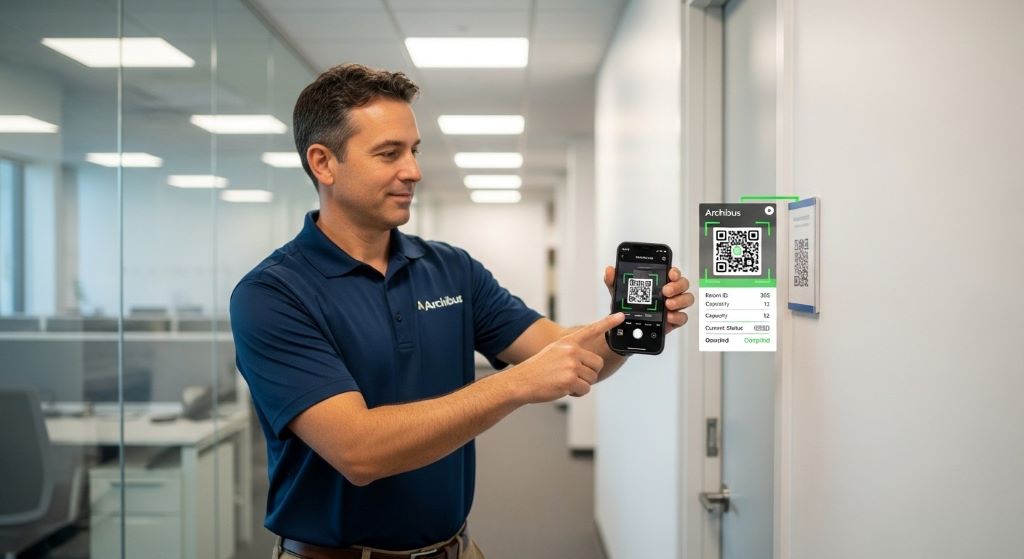
QR code scanning links physical spaces to digital records instantly. Facilities staff scan codes accessing maintenance history, space attributes, and pending changes. Additionally, scanning simplifies data collection during audits and inspections.
Offline functionality ensures mobile access continues without network connectivity. Users download relevant data before entering areas with poor coverage. Therefore, basement mechanical rooms and remote locations don’t impede data access.
Photo documentation captures space conditions before and after changes. Visual records support quality control, dispute resolution, and historical tracking. Moreover, photos enhance communication between field staff and remote coordinators.
Implementation Best Practices
Successful Archibus implementation begins with accurate baseline data collection. Organizations must verify existing floor plans and space assignments before system launch. This foundational work prevents data quality issues undermining user confidence.
Change management training prepares users for new processes and expectations. Comprehensive training covers self-service portals, approval workflows, and reporting access. Additionally, role-based training ensures users understand their specific responsibilities.
Phased rollout approaches manage implementation complexity and risk. Organizations might start with move management before adding project management capabilities. Therefore, users adapt gradually rather than facing overwhelming system changes.
Executive sponsorship proves critical for driving adoption and process compliance. Leadership must reinforce system usage expectations and celebrate early successes. Moreover, executive visibility demonstrates organizational commitment to improved facility management.
Measuring Return on Investment
Archibus delivers measurable returns through reduced move costs and improved space utilization. Organizations track cost per move before and after implementation revealing significant savings. Additionally, increased space utilization delays expensive real estate acquisitions.
Time savings from automated workflows represent substantial value. Facilities staff redirect hours previously spent on manual coordination toward strategic initiatives. Therefore, organizations accomplish more with existing resources.
Improved data accuracy reduces errors causing costly corrections and delays. Reliable space information supports better decision-making across the organization. Moreover, accurate data prevents double-booking spaces and conflicting change initiatives.
Enhanced employee satisfaction results from streamlined move processes and responsive service. Reduced disruption and clearer communication improve workplace experience. Additionally, satisfied employees demonstrate higher productivity and retention rates.
Conclusion
Archibus software transforms facility change management through centralized data, automated workflows, and comprehensive analytics. The platform addresses traditional challenges including poor visibility, manual processes, and compliance complexity. Organizations implementing Archibus benefit from reduced costs, improved space utilization, and enhanced operational efficiency. Therefore, facilities teams can focus on strategic initiatives rather than administrative coordination. Successful implementation requires accurate baseline data, thorough training, and strong executive support. The measurable returns through cost savings, time efficiency, and improved decision-making justify the investment in this powerful facility management solution.
Frequently Asked Questions
What is Archibus facility management software?
Archibus is an integrated workplace management system handling space management, move management, capital planning, and facility operations. The web-based platform centralizes facility data, automates workflows, and provides analytics for organizations managing complex real estate portfolios across single or multiple locations.
How much does Archibus software cost?
Archibus pricing varies based on modules selected, user counts, and implementation scope. Organizations typically invest between $50,000 and $500,000 for software licenses and implementation services. Cloud-hosted options offer subscription pricing reducing upfront costs while providing scalability.
Can Archibus integrate with existing building systems?
Yes, Archibus integrates with CAD software, building automation systems, HR platforms, and financial systems through standard APIs and connectors. These integrations ensure data synchronization across systems, eliminating duplicate entry and maintaining accuracy throughout connected platforms.
How long does Archibus implementation take?
Implementation timelines range from three months for basic configurations to twelve months for complex, multi-site deployments. Timeline factors include data migration complexity, customization requirements, integration scope, and organizational change management needs. Phased approaches can deliver value incrementally.
What training is required for Archibus users?
Archibus training requirements vary by role. End users need two to four hours covering self-service portals and basic functions. Facilities managers require one to two days for workflow management and reporting. Administrators need one to two weeks for system configuration and maintenance.
Related Topics:
Diving Deep: Unveiling the System Requirements for Blender – A Comprehensive Guide
The Power of Logo Design: Your Visual Brand Ambassador
Sorry, the comment form is closed at this time.