
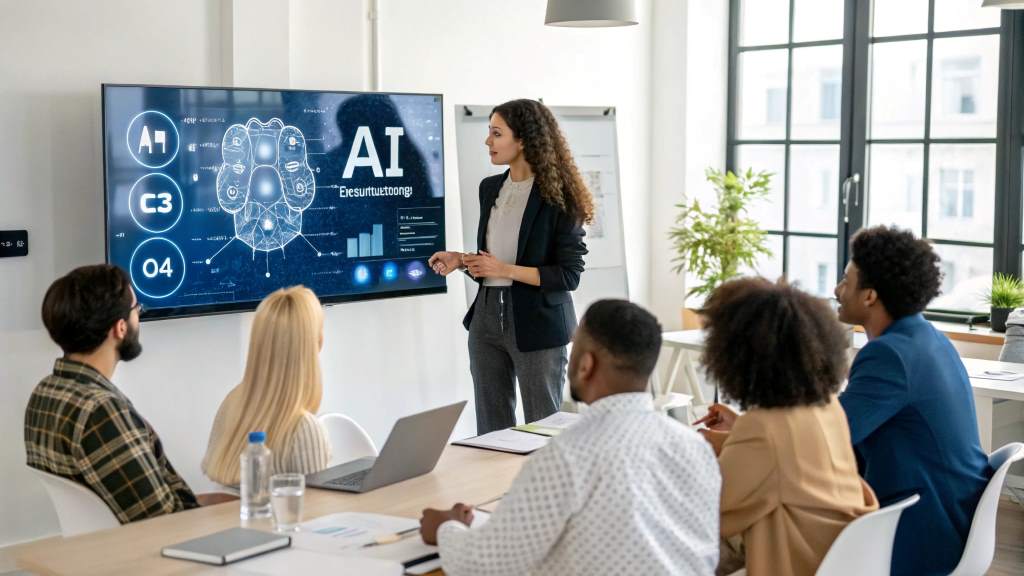
AI in HR Learning and Development: Revolutionizing Workplace Growth
Artificial Intelligence (AI) is transforming industries across the board, and Human Resources (HR) is no exception. In particular, AI in HR learning and development is reshaping how employees learn, grow, and stay engaged in their workplaces. Traditional training methods are being enhanced—or even replaced—by smart algorithms, personalized learning paths, and AI-driven analytics.
From adaptive learning systems to chatbot coaching, AI is making training more efficient, engaging, and cost-effective. Organizations that embrace AI-powered learning platforms see higher retention rates, improved productivity, and more agile teams.
But how exactly does AI impact learning and development in HR? What challenges does it pose? And how can companies leverage AI responsibly? This article explores these questions in depth.
AI in HR Learning and Development: A Game Changer
The Shift from Traditional to AI-Driven Learning
For decades, companies have relied on classroom-style training, online courses, and mentorship programs to upskill employees. However, these methods often struggle to meet modern workforce demands due to:
- Generic content that lacks personalization
- Limited tracking of individual progress
- Low engagement and completion rates
AI eliminates these limitations by offering:
- Personalized learning experiences tailored to individual employee needs
- Real-time progress tracking and performance analytics
- Interactive AI-driven content such as chatbots and virtual simulations
This shift enhances the learning experience, ensuring employees remain engaged and progress at their own pace.
How AI is Transforming HR Learning and Development

1. Personalized Learning Paths
AI-powered learning platforms use machine learning (ML) algorithms to analyze employees’ skills, learning styles, and preferences. Based on this data, AI creates:
- Custom learning paths with courses and modules specific to individual needs
- Adaptive learning environments that modify content in real-time based on performance
- Microlearning modules that deliver short, focused lessons to improve retention
This data-driven approach ensures that learning in generative AI in Fintech is not only relevant but also effective.
2. AI-Powered Chatbots and Virtual Coaches
AI chatbots act as personal learning assistants, providing:
- 24/7 support for employees needing guidance
- Instant feedback on quizzes and assignments
- Automated reminders to encourage course completion
Companies like IBM and Google have integrated AI-powered chatbots into their training programs, significantly improving engagement.
3. Predictive Analytics for Learning
AI collects and analyzes data from employees’ learning activities to:
- Identify knowledge gaps and recommend additional resources
- Predict future skill needs based on industry trends
- Track training effectiveness to refine learning strategies
With predictive analytics, HR leaders can proactively address skill shortages before they impact productivity.
4. Virtual and Augmented Reality (VR/AR) in AI-Based Training
AI enhances VR and AR learning experiences, particularly in industries like:
- Manufacturing (machine operations training)
- Healthcare (medical simulations)
- Retail (customer interaction training)
Employees learn through immersive, hands-on experiences, improving retention and practical application.
5. AI for Soft Skills Training
While AI excels in technical training, it’s also transforming soft skills development, including:
- Leadership training through AI-powered simulations
- Emotional intelligence coaching using natural language processing (NLP)
- Diversity and inclusion programs that assess behavioral patterns
By simulating real-world scenarios, AI provides a safe, judgment-free space for employees to practice communication and decision-making skills.
The Benefits of AI in HR Learning and Development
1. Increased Engagement and Motivation
AI makes learning more interactive, engaging, and dynamic through:
- Gamification (leaderboards, challenges, and rewards)
- Adaptive learning that adjusts difficulty levels based on performance
- AI-driven storytelling that enhances engagement
Employees are more likely to complete training when they find it relevant and enjoyable.
2. Cost-Effective Training
AI reduces training costs by automating:
- Onboarding programs
- Compliance training
- Employee skill assessments
Companies save on instructor fees, travel expenses, and printed materials, making AI an efficient alternative.
3. Scalability and Accessibility
AI-powered learning is scalable, meaning companies can:
- Train thousands of employees simultaneously
- Offer remote and flexible learning options
- Provide multilingual training programs
Employees can learn anytime, anywhere, making AI-driven training accessible to global teams.
4. Data-Driven Decision Making
AI tracks key performance indicators (KPIs), allowing HR teams to:
- Measure learning effectiveness
- Identify high-performing employees
- Refine learning strategies for better results
This data-backed approach ensures continuous improvement in training programs.
Challenges of AI in HR Learning and Development
1. Privacy and Data Security
AI-driven learning collects vast amounts of employee data, raising concerns about:
- Data privacy laws (GDPR, CCPA compliance)
- Cybersecurity risks
- Ethical AI usage
HR departments must ensure secure, transparent data practices.
2. Resistance to AI Adoption
Employees may fear AI replacing human trainers. To counter this, organizations should:
- Emphasize AI as an enhancement to human-led learning
- Offer hybrid training models combining AI and human mentorship
- Provide AI literacy programs to build employee trust
3. Bias in AI Algorithms
AI models may unintentionally reflect biases, leading to unfair learning recommendations.
To prevent this:
- AI must be trained on diverse datasets
- Companies should audit AI decisions regularly
- Transparency in AI-driven recommendations is essential
Future of AI in HR Learning and Development
AI’s role in HR learning will continue to grow with advancements in technology, including:
- AI-driven career pathing that suggests future roles based on skills
- AI-generated content (videos, simulations) for real-time learning
- Hyper-personalized training experiences powered by deep learning
Companies investing in AI-driven learning today will have more agile, skilled workforces tomorrow.
FAQs
How does AI improve employee training?
AI personalizes training, tracks progress, automates content delivery, and enhances engagement through interactive tools.
Is AI replacing human trainers in HR?
No. AI supports trainers by automating repetitive tasks and providing real-time insights, but human mentorship remains vital.
What are the risks of AI in HR learning?
Data privacy, algorithm bias, and employee resistance are key risks. Companies must implement ethical AI practices.
Can AI help with compliance training?
Yes. AI automates compliance tracking, updates policies, and provides real-time compliance assessments.
How do I integrate AI into my company’s learning strategy?
Start with AI-driven learning platforms, assess employee needs, and ensure alignment with business goals.
Conclusion
AI in HR learning and development is revolutionizing workplace training. It enhances personalization, efficiency, and engagement, making learning more effective and scalable. However, organizations must address privacy, bias, and adoption challenges to implement AI responsibly.
By leveraging AI strategically, companies can future-proof their workforce and stay ahead in an increasingly digital world.
Sorry, the comment form is closed at this time.